
In many regions, November marks a transitional period between wetter and drier seasons. Road conditions shift, weather becomes more unpredictable, and the risk to your windshield and auto glass increases. At Low Price Auto Glass, we believe in empowering drivers with knowledge and preventive tips. Below, you’ll find the key November hazards and actionable steps to protect your windshield so you stay safe on the road.
1. Increased Rainfall and Sudden Showers
Even if November is nominally part of the dry season in some locales, light to moderate rains are still common. For example, November rainfall in Metro Manila averages around 70 mm, and many days will have occasional showers or thunderstorms. :contentReference[oaicite:0]{index=0}
These showers come with risks:
- Temperature shifts: Wet roads cool rapidly, and glass already under stress can crack.
- Debris wash-off: Rain and runoff can push rocks, gravel, sticks, or other debris onto roadways — debris that can chip or crack your glass.
- Poor visibility and sudden braking: Sliding vehicles, hard braking, or debris kicked up by other cars may strike your windshield.
How to protect your windshield in rain
- Keep your windshield wipers in good shape. Replace them at the first sign of streaking or invisibility.
- Slow down during the first minutes of a rain event — the road is especially slick, and less control means more chance for debris impact.
- Stay further behind the car in front of you to avoid kicked‑up rocks.
- Check for preexisting chips and repair them. Small damage can propagate rapidly under stress.
2. Fluctuating Temperatures and Thermal Stress
November often brings wider temperature swings—cooler nights and warmer days—especially in inland or elevated areas. These swings can impose thermal stress on auto glass.
How that stress works:
- When the glass is heated unevenly (sunlight on one part, shade on another), small flaws or microcracks can expand.
- If you blast cold air from your air conditioning onto a hot windshield (or vice versa), you may cause abrupt contraction or expansion stress.
Tips to lessen thermal shock
- Avoid parking under direct midday sun if possible — shade helps maintain more uniform glass temperature.
- When starting out, allow the car and glass to gradually adjust rather than immediately hitting max AC on a hot windshield.
- Use a sunshade if you must park in intense sun to reduce abrupt heating of the glass.
3. Debris from Storms, Leaves, and Erosion
November can bring storms or strong winds that loosen branches, leaves, and debris. Road shoulders may harbor gravel, loose stones, or eroded earth that can be thrown by passing vehicles.
Particularly in rural or underdeveloped roads, erosion near ditches or embankments can shift soil and rocks onto the pavement. Drives near trees may be prone to falling twigs or branches. All of these pose risks to your windshield.
Preventive strategies for debris risks
- When driving near trees or overhanging branches, slow your speed to reduce impact force.
- On gravel or under-repaired roads, drive slower, and avoid tailgating large trucks or construction vehicles.
- Repair and clean any small chips promptly so they do not worsen in subsequent stress events.
4. Road Surface Deterioration and Potholes
After months of rain, many roads suffer degradation: cracks, uneven patches, or potholes. November is often when lingering damage from rainy months becomes most apparent.
Why this matters to auto glass:
- Hitting a deep pothole or large bump at speed exerts abrupt shock loads through the chassis—pressure that can transmit to the glass.
- Loose debris from broken pavement can be kicked up by your own tires or nearby vehicles.
How to reduce pothole risk to your windshield
- Drive slower on roads you know are poorly maintained or under repair.
- Avoid sudden turns or swerves to dodge potholes—gradual steering gives less shock to the glass.
- Maintain correct tire pressure and suspension alignment—your vehicle’s suspension is a cushion for glass stress.
5. Humidity, Moisture, and Seal Degradation
November’s humidity and occasional moisture can also affect the seals and molds around your windshield and windows. Over time, rubber gaskets and adhesive bonds degrade, especially when repeatedly exposed to wet/dry cycles.
If seals weaken or shrink, water may seep in (fogging or leaks) or allow small vibrations that stress the glass edges. Edge cracks are particularly dangerous.
Seal care and inspection tips
- Inspect windshield edges and molding. Look for gaps, soft spots, or separation.
- Clean and condition rubber seals with a silicone-based protectant to preserve flexibility.
- If you notice water seepage or fogging after rain, have the seals checked immediately.
6. Traffic Congestion & Stop‑and‑Go Stress
November is not always free from peak traffic, especially in urban centers. In Metro Manila, for example, congestion is notoriously high—travel times for a 10 km trip in Manila can stretch to over 30 minutes in heavy traffic. :contentReference[oaicite:1]{index=1}
Frequent braking, jolting from stop-and-go motion, and micro‑bumps in traffic can cumulatively stress your windshield glass, especially if there are existing weak points.
Tips for city driving stress
- Drive as smoothly as possible—gradual acceleration and braking reduce jolts.
- Take alternate routes or travel outside peak times to avoid bumper-to-bumper grids.
- If you detect vibrations or noises, have your vehicle suspension and glass alignment checked.
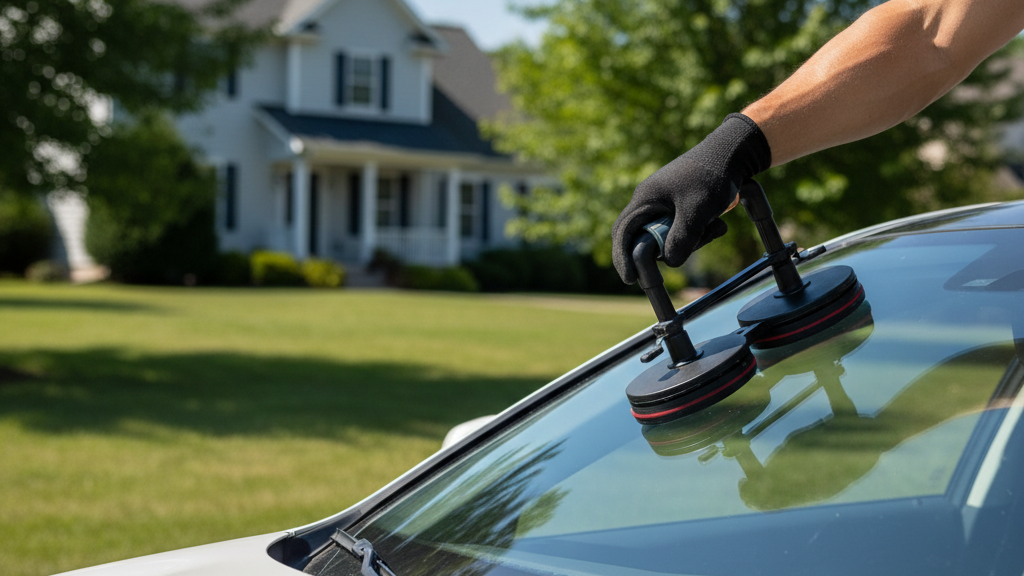
When to Seek Professional Inspection or Replacement
Even with preventive care, damage can occur. Here’s when to call in professionals like us at Low Price Auto Glass:
- If you have a chip or crack near the edge of your windshield.
- If cracks or chips form multiple branches (i.e. spiderweb patterns).
- If the damage exceeds a few inches in length or impairs visibility.
- If you detect leaks, fogging, or seal separation after rain.
- If you feel excessive vibration, flexing, or hearing noises around your glass while driving.
Windshield replacement is not just cosmetic—your windshield is part of the structural integrity of your vehicle. In a rollover, it helps to contain occupants. Also, safety systems like airbags rely on a properly seated windshield to function as designed.
Summary Checklist: Protect Your Windshield This November
| Hazard | Protective Action |
|---|---|
| Rain / sudden showers | Slow down, use good wipers, maintain distance |
| Thermal stress | Avoid abrupt heating/cooling, shade park, gradual warm-up |
| Debris & branches | Drive slower near trees, avoid loose road edges |
| Potholes / rough road | Drive slower, avoid abrupt maneuvers, maintain suspension |
| Seal degradation | Inspect seals, clean & condition rubber moldings |
| Traffic stress | Drive smoothly, avoid excessively congested routes |
Need Help? Let Us Inspect Your Auto Glass
If you suspect your windshield has damage—however minor—don’t wait for November’s weather to worsen it. Contact us at Contact Us today. Our expert technicians can evaluate your glass, offer safe repair or replacement options, and restore your windshield integrity before major issues develop.
