Direct Answer: Repair a cracked windshield when damage is smaller than a dollar bill (typically under 6 inches), located outside the driver’s critical vision zone, and not at the windshield edge. Replace when cracks exceed 6 inches, multiple chips compromise structural integrity, damage obstructs driver visibility, or edge cracks threaten laminated glass integrity. According to NHTSA safety standards, windshield structural support provides 45% of cabin strength during rollover accidents, making the repair vs replace decision critical for vehicle safety. (Chip vs crack windshield repair guide)
Windshield Repair vs Replacement: Quick Comparison Table
| Feature | Windshield Repair | Windshield Replacement |
|---|---|---|
| Cost Range | $50-$150 (often $0 with comprehensive coverage) | $200-$1,000+ (varies by OEM glass vs aftermarket options) |
| Duration | 30-60 minutes including resin curing time | 2-4 hours plus 24-hour adhesive strength period |
| Damage Size Limit | Chips under 1 inch diameter, cracks under 6 inches | Any crack length, multiple combination breaks |
| Insurance Deductible | Often waived under comprehensive glass coverage | Standard deductible applies ($250-$1,000 typical) |
| Structural Integrity | Restores 80-90% original strength | Restores 100% factory specifications |
| ADAS Calibration | Not required for chip repairs | Mandatory for camera and sensor alignment |
| Service Options | Mobile windshield repair or shop service | Typically requires auto body shop facilities |
What Windshield Damage Can Be Repaired?
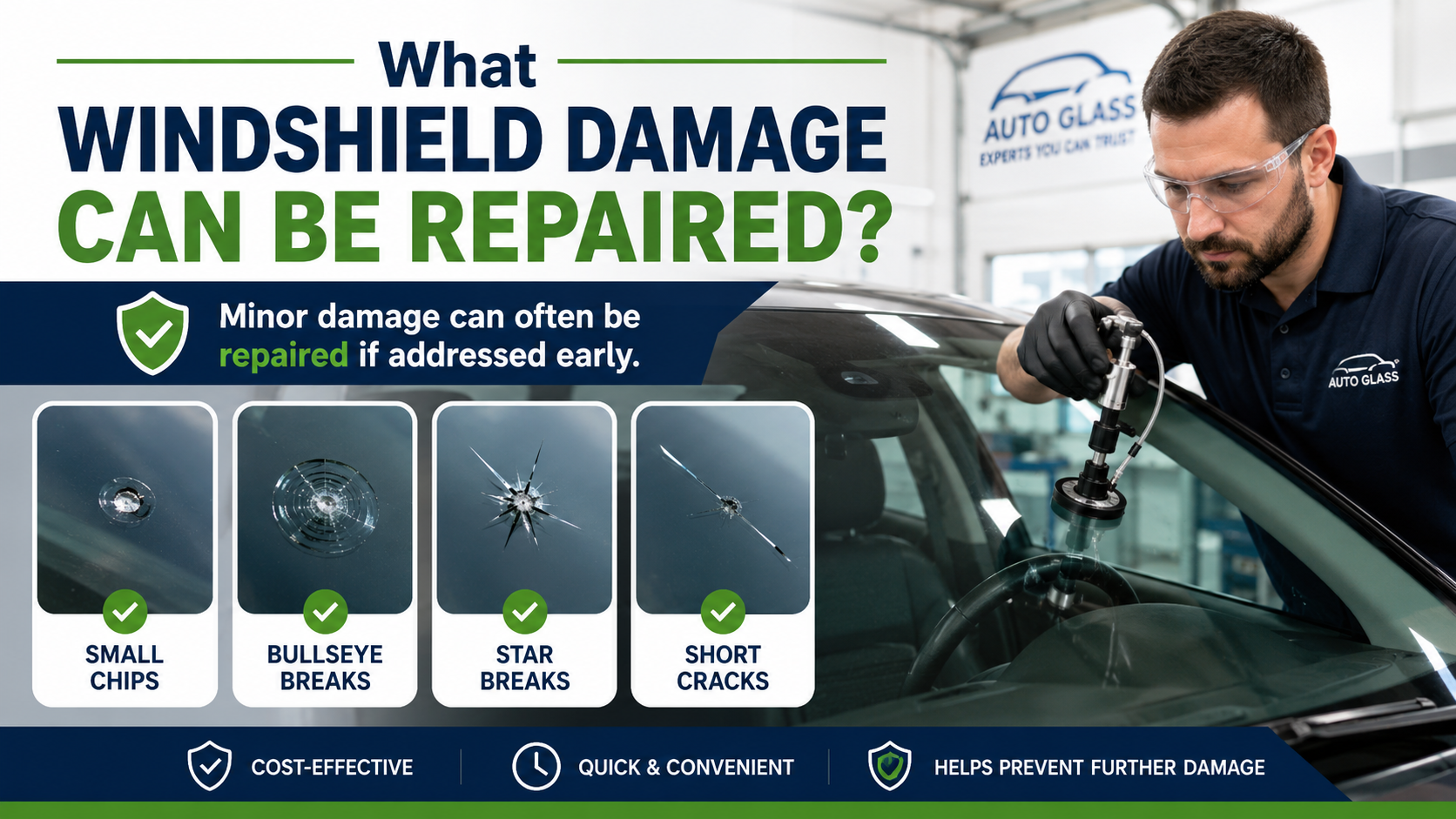
Repairable windshield damage follows specific criteria established by professional assessment standards and DOT regulations. A certified glass technician evaluates damage severity using three primary factors: size, location, and depth.
Chip Types Eligible for Repair
Bull’s eye cracks (circular impact damage) under 1 inch diameter represent the most successful repair category, with resin injection achieving 90% structural restoration. Star breaks radiating from a central impact point qualify for small crack repair when total diameter remains under 3 inches. According to industry repair guidelines, stone chip repair succeeds when damage penetrates only the outer glass layer, preserving inner laminate integrity.
Combination breaks involving multiple crack patterns require professional windshield repair evaluation. The repair quality depends on whether damage depth reaches the plastic interlayer between laminated windshield panels.
Crack Size and Repair Limitations
The question “how big of a windshield crack can be repaired” has a consistent answer across certified technicians: 6 inches represents the maximum repairable crack length. This threshold exists because glass repair resin cannot maintain adhesive strength across longer distances while preventing crack propagation.
A windshield crack in driver line of sight under 2 inches may qualify for repair if positioned below eye level. However, line of sight obstruction from repair resin often necessitates replacement to meet vehicle safety standards for unimpeded driver visibility.
Location Factors in Repair Eligibility
Edge crack windshield damage always requires replacement regardless of size. Unlike center crack damage, windshield edge crack compromises the seal between glass and frame, allowing moisture infiltration that accelerates spreading crack growth. State regulations typically mandate replacement when damage extends to within 2 inches of the windshield perimeter.
Driver side damage receives stricter evaluation than passenger side damage due to critical vision zone considerations. Floater crack windshield damage (not touching edges) located outside the driver’s direct vision area offers the best repair success rates.
When Is Windshield Replacement Necessary?
Replacement necessity stems from safety concerns that repair cannot adequately address. NHTSA research demonstrates that windshield structural integrity provides essential rollover safety protection and supports proper airbag function during frontal collisions.
Safety-Mandated Replacement Scenarios
When does a cracked windshield become a safety hazard requiring immediate replacement? Non-repairable damage includes any crack exceeding 6 inches, multiple windshield chips (typically more than three) affecting different quadrants, or damage causing visual obstruction in the critical vision zone.
Stress crack in windshield originating from temperature fluctuation or structural settling typically propagates rapidly. These stress fractures often begin at edges and spread across the entire windshield within days, making immediate replacement essential before further expansion.
Structural Damage Requiring New Glass
Large crack replacement becomes mandatory when damage affects both inner and outer glass layers of laminated glass construction. According to auto glass safety standards, inner layer compromise reduces impact resistance by 60%, eliminating repair as a viable option.
Impact crack penetrating through to the plastic interlayer creates delamination risk. Professional windshield crack repair cannot restore proper bonding once this separation occurs, necessitating complete windshield replacement to maintain structural support.
ADAS and Calibration Requirements
Vehicles equipped with advanced driver assistance systems require windshield replacement with ADAS calibration when damage affects camera positioning or sensor alignment areas. Modern windshields house cameras for lane departure warnings, automatic emergency braking, and adaptive cruise control.
Can windshield with camera be repaired? Only if damage occurs at least 4 inches from camera mounting locations. Otherwise, replacement ensures proper camera recalibration according to OEM specifications. According to calibration requirements, sensor misalignment of just 1 degree can cause system failures, making precise windshield installation critical.
Windshield Crack Repair vs Replacement Cost Analysis
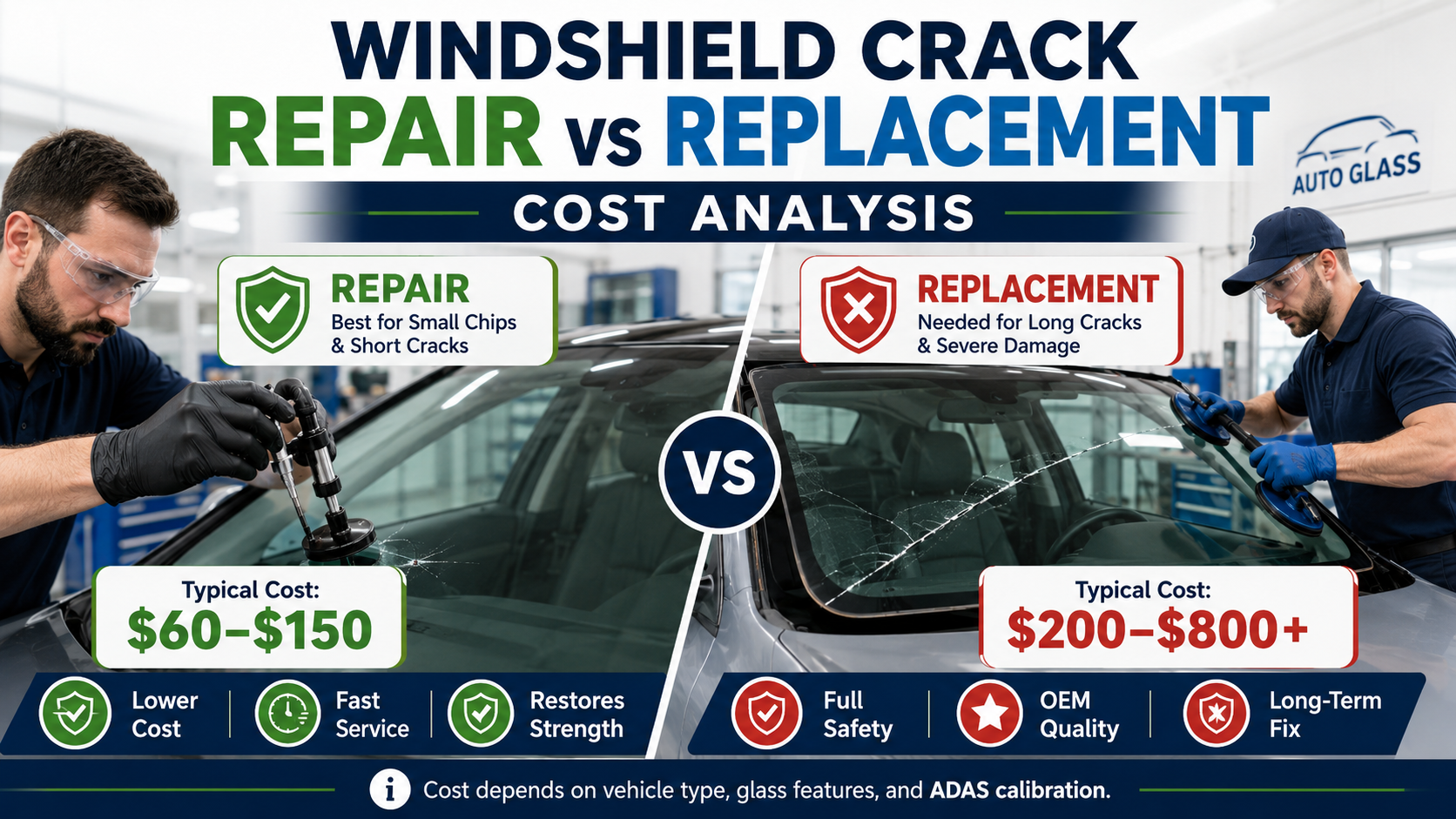
Cost comparison between repair and replacement involves multiple financial factors beyond initial service pricing. Insurance coverage significantly impacts out-of-pocket expenses for both options.
Insurance Coverage Considerations
Does insurance cover windshield repair or replacement? Comprehensive insurance windshield coverage typically includes full repair costs with zero deductible windshield replacement coverage in states like Florida, Kentucky, and South Carolina. According to insurance windshield claim data, carriers waive deductibles for repairs to encourage prompt damage assessment before cracks spread.
Standard comprehensive glass coverage requires deductible payment for replacement (typically $250-$1,000), whereas chip vs crack windshield repair receives full coverage without deductible. This insurance structure incentivizes early intervention when damage remains within repair limitations.
Long-Term Cost Implications
Windshield repair cost ranges from $50-$150, representing 75-90% savings versus replacement. However, repair resin effectiveness diminishes if damage continues spreading, potentially requiring subsequent replacement.
How much does windshield replacement cost with insurance after deductible? Labor cost plus parts cost total $200-$400 for aftermarket glass or $400-$1,000 for OEM glass, minus comprehensive claim deductible. Windshield replacement with ADAS calibration cost adds $150-$300 for camera and sensor recalibration using specialized equipment.
Professional Windshield Damage Assessment Process
How to know if windshield needs replacement or repair requires professional evaluation beyond visual inspection. Certified glass technicians use standardized damage assessment criteria considering multiple factors simultaneously.
Mobile glass service providers like Safelite offer free inspections at customer locations, examining chip diameter, crack length, and damage depth using specialized tools. The technician evaluates whether repair quality will meet safety standards or if replacement necessity exists based on structural damage indicators.
DIY vs Professional Service
Can you repair a cracked windshield yourself using windshield repair kits? DIY windshield repair succeeds only for small chips under 1/2 inch located outside critical viewing areas. Professional windshield crack repair delivers superior results through commercial-grade resin injection under vacuum pressure, achieving stronger bonds than consumer kits.
Professional windshield repair by certified technicians includes warranty coverage (typically 1 year) guaranteeing repair success. In contrast, DIY attempts lack structural verification and may void comprehensive glass coverage if subsequent professional repair becomes necessary.
Use-Case Scenarios: Repair vs Replace Decision Examples
Scenario 1: Small Stone Chip on Highway
A driver notices a quarter-sized bull’s eye crack from highway debris on the passenger side, 8 inches from the edge. Decision: Immediate repair. The damage falls well within repair eligibility criteria. Mobile windshield repair completes the fix in 45 minutes with resin curing time, preventing crack propagation. With comprehensive coverage, the service costs $0 out-of-pocket, and the driver avoids the higher replacement deductible.
Scenario 2: Edge Crack After Temperature Change
Following defrost use on a cold morning, a 3-inch stress crack appears originating at the windshield edge near the driver’s side. Decision: Replace immediately. Despite the relatively small size, windshield edge crack location compromises seal integrity and threatens rapid spreading. The crack’s proximity to the driver’s critical vision zone and structural concerns make this non-repairable damage requiring urgent attention before the crack extends across the entire windshield.
Scenario 3: Multiple Chips from Construction Area
After driving through a construction zone, a vehicle has four separate chips ranging from dime to quarter size scattered across the windshield. Decision: Evaluate for replacement. While individual chips might qualify for repair, multiple windshield chips affecting different quadrants suggest compromised overall integrity. A professional assessment determines whether combination break patterns and cumulative damage necessitate replacement for optimal vehicle safety standards compliance.
Scenario 4: Crack Near ADAS Camera
A 4-inch star break appears directly below the rearview mirror where the forward-collision camera mounts. Decision: Replace with calibration. Even though crack size falls within general repair limits, camera positioning requirements prohibit repair near sensor locations. Replacement ensures proper ADAS recalibration, maintaining advanced safety systems. The additional calibration requirements add cost but preserve critical automated safety functions essential for modern vehicle inspection standards.
Decision Framework: Choose Repair or Replacement
Choose Windshield Repair If:
- Damage measures under 6 inches for cracks or 1 inch for chips
- Location falls outside the driver’s critical vision zone (8-inch area in front of driver)
- Impact damage affects only the outer glass layer
- No edge crack or damage within 2 inches of windshield perimeter
- Fewer than three separate damage points exist
- No ADAS camera or sensor interference occurs
- Immediate repair prevents growing damage from temperature fluctuation
- Comprehensive insurance covers repair with zero deductible
Choose Windshield Replacement If:
- Crack length exceeds 6 inches or continues spreading
- Damage obstructs driver visibility in line of sight areas
- Edge crack threatens structural integrity and seal failure
- Inner and outer glass layers both show damage depth penetration
- Multiple combination breaks affect different windshield quadrants
- Camera or sensor areas require undistorted glass for proper function
- Delayed replacement risks failing state vehicle inspection requirements
- Structural damage compromises rollover safety or airbag function support
Timing Considerations: How Long Can You Wait?
How long can you drive with cracked windshield before repair? Safety experts recommend addressing any auto glass damage within 24-48 hours. Temperature change from heating and cooling cycles causes crack propagation at rates of 1-2 inches per day under stress conditions.
Is it safe to drive with cracked windshield while awaiting service? Stable crack patterns without spreading pose minimal immediate risk, but visual obstruction from damage location and reduced structural support during potential accidents create liability concerns. Highway safety organizations recommend avoiding high-speed driving until repair or replacement restores windshield integrity.
Will windshield repair prevent crack from spreading? Professional repair using urethane sealant and high-grade resin stops crack expansion in 95% of cases when performed within 48 hours of initial damage. According to repair success data, delayed intervention reduces effectiveness as moisture and debris contaminate damage areas.
Selecting Quality Auto Glass Service
Professional glass technician certification through organizations like the Auto Glass Safety Council ensures adherence to proper urethane adhesive application and curing time requirements. Mobile service options provide convenience while maintaining quality standards equivalent to auto body shop installations.
OEM glass specifications match original manufacturer standards for thickness, tint, and optical clarity, whereas aftermarket options offer cost savings with potentially minor quality variations. Warranty coverage for both labor cost and parts cost typically extends 12 months for repairs and lifetime for replacement when performed by certified providers.
When making the repair vs replace decision, immediate professional assessment provides the most accurate evaluation of damage severity and appropriate remediation. Comprehensive claim submission assistance and insurance company coordination streamline the process whether choosing repair or replacement.
